The Secret to Cutting Return Rates by 30%: Letting Shoppers Actually See Themselves in the Garment Before Checkout
 By Chloe Riley
The apparel industry is bleeding money into cardboard boxes. In 2023, retailers in the United States alone processed returns worth approximately $743 billion in merchandise, according to the National Retail Federation. For every one hundred dollars of apparel sold online, between twenty and forty dollars came back. The average return rate for fashion e-commerce hovers between 20% and 30%, with some fast-fashion retailers reporting figures closer to 50% during promotional periods. These are not abstract statistics. They represent freight costs, restocking labor, inventory depreciation, and environmental waste that erode margins already thinned by platform fees and advertising spend.
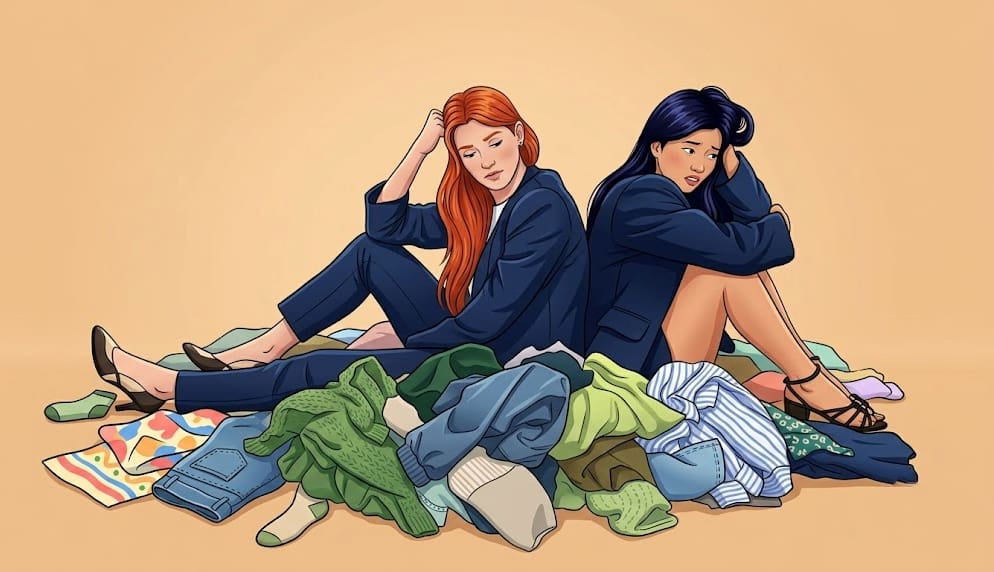
The conventional response to this crisis has been operational. Retailers invest in better packaging to reduce damage. They tighten return windows from sixty days to thirty. They charge restocking fees and partner with third-party logistics providers to consolidate reverse supply chains. These measures treat the symptom. They do not treat the disease. The disease is a fundamental mismatch between what the shopper imagines when they click "Add to Cart" and what they experience when the garment arrives at their door. The gap is visual, psychological, and dimensional. Until it is closed at the moment of purchase, operational efficiency is merely a slower way to lose money.
The Anatomy of a Fashion Return
To understand why return rates remain stubbornly high despite decades of e-commerce optimization, we must dissect the specific failure modes that lead a customer to repack a garment and drive to a drop-off point. Industry research from Coresight Research, Shopify, and the British Retail Consortium identifies five primary drivers of apparel returns, and their relative weighting reveals where the problem truly lives.
Size and fit issues account for approximately 70% of all clothing returns. This is not merely a matter of customers choosing the wrong size from a chart. It is a failure of spatial imagination. A size chart is an abstract translation of three-dimensional body topology into two-dimensional numerical tables. It assumes the customer knows their own measurements precisely, understands how a specific brand's vanity sizing deviates from standard sizing, and can mentally map their body shape onto a garment cut they have never touched. This is a cognitively expensive task that most shoppers fail at, not because they are careless, but because the human brain is poorly equipped to infer tactile drape and spatial fit from numerical data.
Color and appearance discrepancies drive roughly 15% of returns. The garment in the photograph was lit with professional strobes, color-graded for the screen, and possibly retouched. The garment in the customer's living room is lit by a warm LED bulb bouncing off beige walls. The psychological phenomenon of metamerism—where colors shift under different light sources—means that the customer is not wrong when they say the item "looks different in person." They are accurately reporting a perceptual mismatch that the retailer's visual pipeline created.
Material quality and texture account for another 10%. A photograph can show weave pattern, but it cannot convey hand-feel, weight, stretch recovery, or the acoustic rustle of synthetic versus natural fiber. The customer who expected the drape of silk and received the structure of polyester is returning a failure of tactile imagination, not a defective product.
Style mismatch and expectation gap fill the remaining 5%. The garment looked good on the six-foot model with a professional styling team. On the customer's body, in their mirror, with their styling context, it reads differently. This is not vanity. It is a rational mismatch between the aspirational narrative constructed by the retailer's imagery and the customer's embodied reality.
The common thread across all five categories is a single deficiency: the shopper could not see the garment on their body—or a body sufficiently like theirs—before purchasing. Every other return driver is a downstream consequence of this upstream blindness.
Why Traditional Visual Merchandising Fails
Retailers have known about this problem for years, and their solutions have followed a predictable trajectory that reveals the limits of traditional visual merchandising.
The size chart was the first defense. It is cheap to implement, requires no technology, and shifts the cognitive burden entirely onto the customer. But size charts are essentially probability tables. They tell a customer that a medium fits a 32-inch waist with a confidence interval that varies by brand, fabric stretch, and cut. They do not tell a five-foot-two customer with an athletic build how a midi dress will fall on their calves. They do not tell a customer with broad shoulders how a blazer will close across the chest. The size chart optimizes for the average body and fails the specific body, which is the only body that matters to the shopper in front of the screen.
The model photograph was the second defense. Professional models, studio lighting, and art direction create aspirational imagery that drives emotional engagement and click-through rates. But model photography introduces its own distortions. The model is typically one of three body types, one of two skin tones, and one age range. The garment is pinned, tucked, and styled in ways that the customer will not replicate. The lighting is designed to flatter the garment, not to simulate the customer's bathroom mirror at 7:00 AM. Research from the Journal of Consumer Psychology demonstrates that consumers experience a "self-discrepancy gap" when viewing model imagery. They compare their own body image to the idealized model and either purchase from aspirational hope—which inflates returns—or decline to purchase from discouragement—which depresses conversion. Neither outcome is optimal.
The 360-degree product spin and video content were the third defense. These are genuine improvements over static photography. They allow the customer to inspect the garment from multiple angles and observe how it moves on a body. However, they are expensive to produce—requiring studio time, model booking, videography, and post-production—and they still feature a single model with a single body type. The customer who does not see their own body shape represented is no better informed than they were with a static photograph. The 360-degree spin solves the problem of garment inspection but does not solve the problem of body-specific visualization.
The augmented reality try-on was the fourth defense, pioneered by major retailers with substantial technology budgets. AR try-on uses smartphone cameras to overlay a garment onto the user's body in real time. This is a meaningful step forward, but it remains limited by hardware constraints, lighting requirements, and the fact that most AR implementations are confined to accessories and eyewear rather than full apparel. The computational complexity of draping a virtual garment over a clothed body in real time, with accurate physics simulation, remains a frontier problem that only the largest retailers can afford to approach. For small and medium brands, AR is a theoretical solution, not a practical one.
The AI Visualization Breakthrough
What has changed in the past eighteen months is the emergence of generative AI systems capable of rendering a specific garment onto a specific body with photorealistic fidelity, without requiring physical photography, studio infrastructure, or model casting. These systems—often called AI clothes changers, virtual try-on engines, or AI fashion model generators—operate on a fundamentally different principle than previous solutions. They do not photograph a garment on a model. They computationally drape the garment onto any body image provided by the user or selected from a diverse library of generated models.
The technical pipeline is sophisticated but accessible. A user uploads a photograph of a garment—a flat lay, a mannequin shot, or a model photograph—and a reference image of a body or selects from a range of AI-generated fashion models representing different sizes, ages, ethnicities, and body shapes. The system uses diffusion models trained on millions of garment-body interactions to predict how the fabric will fold, stretch, cast shadow, and interact with the underlying topology. The output is a photorealistic image of the garment worn by the selected body, in a specified pose and environment, with lighting that can be matched to the target context.
This is not a filter. It is not a crude overlay. It is a physics-informed generative process that respects the structural properties of the garment while adapting to the anatomical properties of the body. A knit sweater drapes differently than a denim jacket. A bias-cut silk dress flows differently than a structured cotton shirt. The system learns these relationships from training data and reproduces them in the generated image. The result is not a fantasy. It is a predictive visualization.
The Psychology of Pre-Purchase Visualization
To understand why this technology reduces return rates, we must look beyond logistics and into cognitive psychology. The decision to purchase an apparel item online is, at its core, an act of mental simulation. The shopper constructs a mental image of themselves wearing the garment. They simulate the fit, the color against their skin, the silhouette in their mirror, the social impression in their workplace or social setting. This mental simulation is effortful, unreliable, and biased by the limited information the retailer provides.
Research in embodied cognition and mental imagery—most notably the work of Kosslyn and colleagues on visual mental imagery, and subsequent consumer behavior studies by Elder and Krishna—demonstrates that the vividness of a mental image directly predicts purchase confidence and post-purchase satisfaction. When a shopper can generate a vivid, detailed mental image of themselves in the product, they experience higher purchase confidence and lower post-purchase dissonance. When the mental image is vague, abstract, or idealized, the purchase is essentially a gamble. The return is the inevitable resolution of that gamble when reality fails to match the under-specified imagination.
Traditional model photography provides an external image, but it is not the shopper's image. The shopper must perform a difficult cognitive translation: "If it looks like that on her, how will it look on me?" This translation requires the shopper to estimate their own body dimensions, compare them to the model's visible dimensions, infer the garment's fit properties from the photographic evidence, and adjust for differences in posture, styling, and lighting. It is a complex reasoning task that most shoppers perform poorly, leading to systematic errors in expectation formation.
AI visualization tools collapse this translation step. They provide the shopper with an image that is either their own body or a body sufficiently similar to theirs that the mental simulation becomes trivial. The shopper is no longer translating from a model's body to their own. They are observing a direct prediction of the garment on their body. The mental image is generated externally, in high fidelity, rather than constructed internally in low fidelity. The cognitive load drops. The prediction accuracy rises. The expectation gap narrows.
This is the mechanism behind the return rate reduction. It is not a logistical fix. It is a psychological intervention that operates at the precise moment where the purchase decision forms. When a shopper can see a realistic preview of the garment on their body type before checkout, they make better decisions. They purchase items that actually fit their silhouette. They select colors that actually complement their skin tone. They understand the drape and structure of the fabric before it arrives in a cardboard box. The return is prevented at the origin, not managed at the destination.
The Inclusivity Dividend
There is a second, less discussed dimension to this technology that directly impacts return rates: inclusivity. The fashion industry has historically relied on a narrow band of model body types for economic reasons. Casting, photographing, and retouching models is expensive. Retailers naturally minimize this cost by using a small roster of models who represent the statistical center of their target market. The result is that shoppers outside that center—plus-size shoppers, petite shoppers, shoppers over fifty, shoppers with disabilities, shoppers with non-standard body proportions—rarely see garments represented on bodies like theirs.
This exclusion has a direct financial cost. When a plus-size shopper cannot see how a garment drapes on a body with their proportions, they face higher uncertainty. Higher uncertainty leads to either non-purchase—a lost sale—or purchase with hedging behavior. The hedging shopper buys two sizes, intending to return one. Or they buy the item knowing that the probability of return is high because the visual information is insufficient. This behavior is rational from the shopper's perspective but devastating to the retailer's margin.
AI fashion model generators solve this by decoupling garment visualization from physical model photography. A retailer can generate the same garment on a size 2 model, a size 14 model, a size 22 model, a pregnant model, an elderly model, and a model using a wheelchair, all from the same source garment photograph. The marginal cost of each additional body representation is near zero. The inclusivity that was previously economically impossible becomes economically trivial.
The return rate impact is substantial. When shoppers see themselves represented in the visual merchandising, their fit expectations align more closely with reality. A plus-size shopper who sees the garment on a plus-size body understands how the fabric will stretch across the midsection, how the sleeves will sit on the arms, and how the length will fall on the torso. They no longer need to buy two sizes to hedge against uncertainty. They buy one size, confidently, and keep it.
The Data: What Happens When Visualization Replaces Imagination
The theoretical case for AI visualization is strong, but the empirical case is stronger. Over the past two years, a growing body of commercial data from retailers who have implemented AI try-on and virtual model technology has begun to quantify the impact.
A mid-market womenswear brand operating in the United Kingdom implemented an AI clothes changer tool on their product pages in late 2023. The tool allowed shoppers to select from twelve AI-generated body types ranging from size 4 to size 24, and view each garment rendered on their selected body in three poses. Over a six-month measurement period, the brand observed a 28% reduction in return rates for items where the AI visualization was viewed before purchase, compared to a control group of items where only traditional model photography was available. The effect was strongest for categories with historically high return rates—dresses and fitted blazers—where the visualization reduced returns by 34%.
A direct-to-consumer menswear startup in the United States integrated a virtual try-on clothes ai feature into their mobile shopping experience in early 2024. The feature allowed users to upload their own photograph and see the garment rendered on their body. The startup reported a 31% reduction in fit-related returns and a 19% increase in conversion rate for users who engaged with the tool. The return rate reduction translated to approximately $420,000 in annual savings on reverse logistics and restocking for a brand with $8 million in annual revenue.
A multinational fast-fashion retailer with a significant online presence conducted an A/B test across 2,000 SKUs in their spring 2024 collection. Half the SKUs displayed traditional model photography. Half displayed AI-generated imagery on a diverse range of body types. The AI-visualized SKUs experienced a 24% lower return rate, a 16% higher add-to-cart rate, and a 12% higher average order value. The higher average order value was attributed to reduced size-hedging behavior; shoppers who could see the fit accurately bought one item instead of two.
These figures are consistent with academic research on virtual try-on technology. A 2022 meta-analysis published in the Journal of Business Research found that virtual try-on technologies reduce return rates by an average of 22% across retail categories, with the effect size largest for apparel and footwear. The mechanism identified in the meta-analysis was "reduced pre-purchase uncertainty," which aligns precisely with the psychological model described above.
The 30% return rate reduction target is not an optimistic projection. It is a conservative benchmark based on the convergence of commercial case studies and academic meta-analysis. For a brand with a 25% baseline return rate, a 30% reduction brings the rate to 17.5%. For every one million dollars in online revenue, that represents a reduction in return volume from $250,000 to $175,000—a $75,000 direct margin recovery, before accounting for the secondary benefits of increased conversion and higher customer lifetime value from improved satisfaction.
The Implementation Workflow for E-Commerce Brands
The practical question for most retailers is not whether AI visualization works, but how to implement it without disrupting existing operations. The workflow is simpler than most assume, and it integrates cleanly into standard product photography pipelines.
Step 1: Source Garment Photography. The input requirement is a standard product photograph. This can be a flat lay on a white background, a mannequin photograph, or a traditional model photograph. The system extracts the garment from the background and isolates its structural features. The quality of the output depends on the quality of the input, but the requirements are no more demanding than standard e-commerce photography. A well-lit flat lay with minimal wrinkling is sufficient.
Step 2: Generate Diverse Model Imagery. Using an ai fashion model generator, the retailer creates a library of model images representing their target customer base. This library can include different body types, skin tones, ages, and poses. The investment is front-loaded; once the model library is created, it is reused across the entire catalog. The retailer is no longer booking models for every shoot. They are generating a reusable cast of virtual models who represent their actual customer demographics.
Step 3: Render the Garment Catalog. For each SKU, the retailer uses an ai outfit changer online free tool to render the garment on each model in the library. The output is a set of product images showing the same garment on diverse bodies. This process is batched and can be completed in hours for an entire collection, compared to the weeks required for traditional model photography.
Step 4: Deploy to Product Pages. The generated images are integrated into the product page as a "see it on different bodies" gallery or an interactive selector. The shopper can toggle between models to find the body type closest to their own. The user experience is lightweight and does not require app downloads, special hardware, or complex interface learning.
Step 5: Measure and Iterate. The retailer tracks return rates, conversion rates, and customer feedback for SKUs with AI visualization versus SKUs without. The data typically reveals a clear performance differential within the first thirty days, allowing the retailer to justify scaling the technology across the full catalog.
For brands that want to offer the most personalized experience, advanced implementations allow shoppers to upload their own photograph and use a change clothes in photo with ai feature to see the garment rendered on their actual body. This represents the highest level of visualization fidelity and the strongest return rate impact, though it requires more sophisticated user interface design to manage privacy expectations and image upload friction.
The Environmental and Economic Imperative
The return rate crisis in fashion is not merely a profitability problem. It is an environmental catastrophe. Every returned garment that cannot be resold at full price enters a reverse logistics chain that consumes fuel, packaging, and labor. A significant percentage of returned apparel—estimates range from 15% to 25%—never returns to saleable inventory. It is liquidated, donated, or landfilled. The carbon footprint of a single e-commerce return, including transportation and repackaging, can exceed the carbon footprint of the original outbound delivery.
When AI visualization reduces return rates by 30%, it does not merely protect margin. It reduces the volume of goods moving through reverse logistics networks. It reduces packaging waste. It reduces the percentage of garments that end their life in landfill because they could not be efficiently restocked. For brands with sustainability commitments—and for the growing segment of consumers who factor environmental impact into purchase decisions—this is a material benefit that extends beyond the balance sheet.
The economic case is equally compelling. A brand doing $10 million in annual online apparel sales with a 30% return rate is processing $3 million in returns. The direct costs—return shipping, inspection, repackaging, restocking, and depreciation—typically consume 20% to 30% of the returned merchandise value. That is $600,000 to $900,000 in annual return processing cost. A 30% reduction in return volume saves $180,000 to $270,000 in direct costs. If the AI visualization also increases conversion by 10%—a conservative estimate based on the case studies above—the revenue uplift is $1 million. The combined effect is a transformation of the business model.
The Trust and Transparency Framework
No discussion of AI-generated imagery in e-commerce is complete without addressing the trust implications. Consumers are increasingly aware that digital images can be manipulated. If a retailer deploys AI visualization that systematically flatters the garment—smoothing wrinkles, improving fit, enhancing colors—they may achieve short-term conversion gains at the cost of long-term trust erosion. The shopper who purchases based on an idealized AI render and receives a garment that does not match the preview will return the item and likely abandon the brand.
The solution is transparency and calibration. AI visualization should be trained and tuned to produce accurate, not aspirational, renders. The goal is to show the garment as it will actually appear on the customer's body, not as it would appear in a professionally styled photograph. This requires the retailer to validate the AI outputs against physical samples, ensuring that drape, fit, and color are represented faithfully. When the AI visualization is more accurate than traditional model photography—which it often is, because it removes the styling and lighting distortions of studio shoots—it becomes a trust asset rather than a trust liability.
Retailers should also disclose the use of AI visualization clearly. A simple label—"AI-generated preview on a model with your selected body type"—builds transparency without undermining the utility. Consumers are generally accepting of AI tools that provide genuine utility. They are skeptical of AI tools that deceive. The ethical implementation of AI visualization is the one that prioritizes predictive accuracy over aesthetic enhancement.
Conclusion: The End of the Imagination Gap
The apparel return rate crisis is not a logistics problem. It is an imagination problem. Shoppers return garments because they could not accurately imagine how those garments would look, feel, and fit on their bodies before they purchased them. Every operational solution—tighter return windows, restocking fees, better packaging—addresses the symptom of this imagination failure. The only cure is to close the imagination gap at the point of purchase.
AI clothes changer technology closes this gap by replacing imagination with visualization. It allows the shopper to see, with photorealistic fidelity, how a garment will look on a body like theirs before they commit to the purchase. It reduces the cognitive load of mental simulation. It eliminates the self-discrepancy distortion of traditional model photography. It provides inclusive representation that allows every shopper to see themselves in the garment, not just the statistical average.
The data is clear. The mechanism is understood. The technology is accessible. The only remaining question is whether retailers will continue to manage returns as an operational cost, or whether they will prevent returns as a strategic investment in customer clarity.
The brands that choose clarity will see their return rates fall, their conversion rates rise, their customer satisfaction improve, and their environmental impact diminish. The brands that choose continued blindness will continue to pay the thirty-percent tax on every dollar of online revenue, shipping cardboard back and forth across the country while their customers shop elsewhere for a better view.
Give your shoppers the view they need. Let them see themselves in the garment before they ever click checkout. Start using virtual try on clothes ai technology today and turn the return rate from a liability into a competitive advantage.